
Finding the next breakout artist before they flood public charts can feel like chasing shadows. Most traditional strategies miss key early signals hidden within private playlists and nuanced streaming behavior. If you want to stay ahead, you need practical tools that unlock hidden patterns and actionable data from real listener activity.
This guide will teach you how to spot genuine momentum, identify influential curators, and recognize the lasting appeal of artists using research-backed playlist analysis. By understanding the mechanics of playlist curation and music trends, you'll gain critical advantages that help you discover talent before everyone else. Get ready to uncover new strategies that transform how you predict artist success and secure early wins for your label.
Table of Contents
- 1. Analyze Trends In Private Playlist Adds
- 2. Spot Genre Blending And Unique Artistry
- 3. Track Micro-Trends By Region Or Demographic
- 4. Identify Influential Playlist Curators
- 5. Monitor Repetition And Retention Patterns
- 6. Leverage Early Engagement Beyond Social Metrics
Quick Summary
| Takeaway | Explanation |
|---|---|
| 1. Private playlists signal true momentum | Tracking private playlist adds signals genuine listener interest often ahead of mainstream recognition. |
| 2. Genre blending indicates innovative artistry | Artists blending genres effectively gather diverse listeners and define unique sounds, laying the groundwork for success. |
| 3. Monitor regional micro-trends | Micro-trends in specific locations alert you to emerging scenes before they become widespread phenomena. |
| 4. Identify influential curators early | Building relationships with influential curators can enhance visibility and momentum for new artists significantly. |
| 5. Focus on listener retention patterns | Strong listener retention rates demonstrate an artist's potential for long-term engagement and career sustainability. |
1. Analyze Trends in Private Playlist Adds
Private playlist activity reveals authentic listener preferences before artists reach mainstream charts. Unlike public data that trails behind actual discovery patterns, private playlists capture genuine enthusiasm and early adoption signals.
When artists gain momentum on private playlists, it indicates real organic interest. These collections bypass algorithmic amplification and reflect what your target listeners actually save and share with trusted circles. Understanding how to analyze playlist trends for early artist discovery gives you crucial competitive advantages.
Private playlist additions show several distinct patterns worth tracking:
- Volume growth: Consistent week-over-week increases in adds signal genuine momentum
- Curation diversity: Appearances across varied playlist types indicate broad appeal beyond niche audiences
- Retention rates: Songs that stay in private playlists longer show stronger listener engagement
- Geographic clustering: Regional playlist activity reveals where artists are gaining early traction
- Tempo and discovery: Artists appearing alongside established acts suggest potential breakout capability
Research on user-generated playlists and emerging music trends demonstrates that machine learning analysis applied to playlist data successfully profiles listener behavior and identifies early signals. This data-driven approach outpaces traditional chart monitoring because private additions precede streaming spikes.
Your A&R team should track playlist adds 8-12 weeks before expecting public chart movement. This window provides enough data to validate trends while allowing time for strategic label decisions. Artists with accelerating private playlist adoption have already passed the risky early phases.
Private playlist momentum is your earliest indicator of authentic breakout potential, often preceding public metrics by months.
The advantage is timing. By the time an artist trends publicly, savvy labels already securing deals will have already moved. Early playlist data lets you evaluate talent when acquisition costs remain lower and career trajectories are still malleable.
Pro tip: Focus on private playlists with 500-5000 followers rather than massive public ones; these mid-tier curators identify hits before mainstream playlists catch wind.
2. Spot Genre Blending and Unique Artistry
Genre blending has become a defining characteristic of breakout artists. Artists who fuse multiple genres create distinctive sounds that stand out from traditional category limitations and capture wider audiences.
When you spot artists experimenting across genre boundaries, you are witnessing creative innovation that often precedes mainstream success. These boundary-pushers don't fit neatly into existing playlists, which makes them invisible to algorithmic discovery but highly visible to engaged listeners seeking something new.
The signal here is uniqueness combined with execution. An artist blending genres randomly sounds chaotic. An artist intentionally fusing elements from different traditions creates something cohesive and memorable. Examples like Kendrick Lamar and Billie Eilish demonstrate how genre fusion drives industry recognition, with award organizations increasingly celebrating hybrid approaches over traditional category boundaries.
Private playlists reveal genre blending before it becomes obvious. Look for artists appearing across multiple genre-specific collections simultaneously. This cross-genre presence signals that listeners are discovering something genuinely different.
Key signals of meaningful genre blending:
- Playlist diversity: Artist appears in rock, hip-hop, and electronic playlists within the same timeframe
- Curator curation patterns: Independent curators add the artist to multiple genre playlists
- Listener behavior: Fans follow the artist but also engage with seemingly unrelated genres
- Sonic identity: The artist's production maintains cohesion despite blending multiple styles
- Artistic consistency: Genre experimentation feels intentional rather than scattered
Genre boundaries continue shaping how music gets discovered and consumed across platforms. Understanding how genre identity influences streaming recommendations helps you recognize when an artist is breaking through traditional categorization barriers.
Artists who successfully blend genres often outperform category-specific competitors because they appeal to multiple listener communities simultaneously.
Your competitive edge comes from identifying this artistry while it remains niche. By the time mainstream playlists acknowledge a genre blend, the artist's trajectory is already set.
Pro tip: Track artists who appear in niche playlist combinations (synthwave plus R&B, or folk plus trap) rather than obvious category mashups; these unconventional blends indicate truly innovative artistry.
3. Track Micro-Trends by Region or Demographic
Micro-trends operate at smaller scales than global movements. A regional sound gaining traction in Scandinavia or Southeast Asia often signals where the next major wave originates before reaching North American and European mainstream audiences.
Private playlists expose these localized movements with precision. Unlike public streaming data that aggregates everything into broad categories, private collections reveal what specific communities actually listen to and champion. Artists breaking through in isolated regions demonstrate they can convert listeners into engaged supporters.
Demographic clustering matters equally. An artist gaining momentum among 18-to-24-year-old listeners in urban centers shows different potential than someone popular with 35-plus listeners in suburban areas. Your A&R strategy shifts based on which demographic is driving the artist's initial growth.
Geographic patterns worth monitoring:
- Regional concentration: Heavy playlist adds in one country or city before spreading
- Timing sequences: Artists trending sequentially in different regions rather than simultaneously
- Curator networks: Local curators adding the artist before international tastemakers notice
- Language considerations: Artists gaining traction outside their native language markets
- Cultural resonance: Songs connecting with specific cultural moments or celebrations
Understanding how to analyze geographic music trends helps you identify which regions are generating authentic breakouts versus which are following trends. Artists organically discovering audiences in multiple regions simultaneously show broader appeal than those experiencing isolated spikes.
Demographic data reveals artist longevity potential. An artist popular only with teenagers may face limited career expansion. An artist gaining traction across age groups demonstrates versatility and staying power that justifies larger label investments.
Regional and demographic micro-trends provide your earliest warning system for where the next global movement originates.
Timing is everything here. Artists trending in secondary markets six months ahead of North American adoption represent major opportunities. Your competitive advantage lies in tracking these micro-trends before they become obvious to everyone else monitoring the same data.
Pro tip: Set up dedicated tracking for artists gaining adds in 2-3 consecutive geographic markets within 90 days; this sequential growth pattern indicates genuine momentum rather than isolated regional popularity.
4. Identify Influential Playlist Curators
Playlist curators control gatekeeping power in modern music discovery. A single influential curator adding your artist to their collection can spark momentum that algorithms amplify across entire platforms.
Not all curators carry equal weight. Some operate massive public playlists with millions of followers. Others manage smaller private collections but wield disproportionate influence because their taste shapes what industry tastemakers and fellow curators notice and emulate.
Curator influence operates through several mechanisms:
- Direct adds: Each playlist placement exposes artists to existing followers
- Signal amplification: When respected curators add an artist, other curators follow suit
- Algorithm triggering: Platform algorithms recognize curator patterns and surface similar artists
- Network effects: Artist gains credibility from curator association
- Cross-pollination: Followers discover artists through curator taste patterns
The strategic insight here is identifying curators before they become obvious. Playlist curator types vary significantly in their reach, influence, and decision-making speed. Understanding these differences determines which curators deserve your label's attention.
Private playlist curators often matter more than public playlist operators. A curator managing a 2,000-follower private collection focused on discovering emerging trap artists influences other industry professionals and fellow curators. This influence multiplies when those influenced curators operate larger public playlists.
Track curator behavior patterns:
- Addition timing: How quickly they add emerging artists versus waiting for validation
- Genre specificity: Whether they curate tight niches or broad categories
- Discovery rate: How many of their added artists gain broader traction
- Network position: Who follows them and who they influence
- Update frequency: How regularly they refresh playlists with new additions
Playlist curators genuinely mediate artist and audience relationships, making curatorial decisions that shape music consumption patterns across entire markets. Your success depends on identifying which curators align with your roster and which ones drive authentic discovery.
The curators identifying artists six months before mainstream recognition represent your most valuable partnerships.
Your A&R strategy should include direct relationships with forward-thinking curators. These individuals see emerging talent early because their curatorial instinct drives them to discover rather than follow trends.
Pro tip: Build a database tracking 50-100 mid-tier private playlist curators in your target genres; monitor their recent additions monthly to spot which artists they champion before broader adoption.
5. Monitor Repetition and Retention Patterns
How often listeners replay an artist's songs reveals more than initial adds ever will. Repetition patterns separate artists with sustainable appeal from those experiencing temporary novelty spikes.
Listeners don't repeatedly add songs they dislike to private playlists. When you see consistent replay behavior, you're witnessing genuine connection rather than curiosity. This behavioral data predicts long-term career viability more reliably than first-week metrics.
The science here matters. Research shows repeat listening follows an inverted-U relationship, where initial repetitions increase enjoyment up to an optimal point before declining. Understanding this pattern helps you distinguish between artists generating sustainable engagement versus those creating temporary interest spikes.
Track these retention signals:
- Replay frequency: How many times songs appear in individual listener histories
- Playlist lifespan: How long songs stay in private collections before removal
- Cross-song consistency: Whether listeners engage with multiple tracks or just singles
- Session patterns: Whether listeners return to artists across different listening sessions
- Demographic retention: Which listener groups maintain repeated engagement
Private playlist data reveals whether listeners treat an artist as background music or active discovery. Artists commanding high repetition rates demonstrate listener loyalty that translates into sustained streaming revenue and tour attendance.
Retention patterns also indicate genre fit. An artist gaining adds but experiencing quick removals suggests playlist placement in wrong genre contexts. An artist maintaining 60-plus days average lifespan in private collections shows proper positioning and authentic appeal.
Listener retention metrics correlate directly with user engagement and platform satisfaction, making repetition tracking essential for predicting which artists drive sustainable listener behavior. This matters because platforms favor artists generating ongoing engagement over one-time listeners.
Artists with strong retention patterns prove they create music listeners actively choose to revisit, not just passively consume.
Your investment thesis should prioritize artists showing both adoption velocity and retention strength. An artist with 500 adds but 15-day average lifespan represents different risk profile than an artist with 200 adds but 75-day average lifespan.
Pro tip: Calculate average playlist retention by tracking when songs are added versus removed; artists maintaining 60+ day lifespans across 30% of placements demonstrate sustainable appeal worth pursuing.
6. Leverage Early Engagement Beyond Social Metrics
Social media followers and engagement rates tell incomplete stories about artist potential. An artist with 50,000 Instagram followers might generate less genuine discovery momentum than an artist with 5,000 followers actively adding songs to private playlists.
Private playlist adoption represents authentic behavior that platforms reward. When listeners save songs to personal collections, they signal genuine interest rather than passive scrolling. This behavioral data predicts streaming sustainability far better than vanity metrics ever could.
The shift toward data-driven artist evaluation has transformed how music organizations identify breakout talent. Informed interpretation of listening patterns and behavioral data enables precise targeting and strategic decision-making beyond surface-level social metrics. Your competitive advantage comes from measuring what actually matters to listener behavior.
Key engagement signals beyond social followers:
- Playlist saves: Direct indicators of listener intent and collection behavior
- Session recency: How fresh listener engagement remains over time
- Cross-playlist movement: Whether listeners discover artists through varied sources
- Listener diversity: Geographic and demographic spread of engaged audiences
- Engagement velocity: How quickly momentum builds within specific communities
Social metrics optimize for viral moments. Private playlist data optimizes for sustainable adoption. An artist trending on TikTok for two weeks represents different investment thesis than an artist gaining consistent weekly playlist adds across six months.
Understanding music discovery mechanisms beyond traditional social channels reveals which artists possess genuine staying power. Platforms increasingly prioritize long-term listener retention over temporary viral spikes, making private playlist metrics your leading indicator for platform success.
The data tells you which artists streaming services will actively promote through algorithmic recommendations. Private playlist momentum signals listener satisfaction that platforms amplify automatically.
Real engagement happens in private playlists where listeners make intentional choices about what they save and revisit.
Your A&R team should track private playlist adoption as primary metric and social media as secondary validation. An artist with explosive social growth but flat private playlist activity represents higher risk than steady private adoption with moderate social presence.
Pro tip: Create quarterly comparison reports tracking each artist's private playlist adds versus social follower growth; artists with accelerating playlist momentum but stable social followers show sustainable trajectory versus those riding social trends.
This table summarizes insights from the article regarding strategies for analyzing music discovery patterns through private playlists.
| Aspect | Details | Benefits |
|---|---|---|
| Analyzing Private Playlist Activity | Tracks week-over-week add growth, curator diversity, song retention, and regional trends. | Enables early artist discovery and competitive edge in talent acquisition. |
| Genre Blending in Music | Identifying artists who innovate by mixing multiple genres, appearing across varied playlist categories. | Highlights unique artistry and broader listener appeal. |
| Monitoring Micro Trends | Focuses on geographic and demographic clustering of playlist trends. | Pinpoints emerging regional movements and target audiences. |
| Influential Playlist Curators | Observing curator behavior and additions across genres and playlists. | Identifies key industry gatekeepers for partnerships and artist promotion. |
| Repetition and Retention Patterns | Examines replay frequency and playlist lifespan for songs. | Evaluates listener loyalty and long-term artist viability. |
| Engagement Beyond Social Metrics | Tracks playlist adoption versus social media growth for artists. | Provides a more accurate measure of genuine listener interest and sustainability. |
Discover Breakout Artists Early With Data-Driven Insights
Identifying breakout artists before they hit mainstream charts is a challenge filled with risks and missed opportunities. The article highlights key pain points such as tracking private playlist momentum, spotting unique genre blending, and monitoring regional micro-trends—critical factors often overlooked when relying only on public metrics. Music24.com solves these challenges by providing exclusive access to millions of anonymized private playlists and powerful analytics that uncover authentic listener behavior and emerging trends well before social metrics or public data reveal them.
With Music24, gain a competitive edge by pinpointing influential playlist curators, analyzing retention patterns, and understanding listener engagement beyond surface-level social media numbers. Our platform empowers A&R teams and music professionals to make smarter, data-driven decisions that reduce acquisition risk and accelerate artist development.
Take control of early artist discovery today by exploring the unique benefits that Music24 offers.
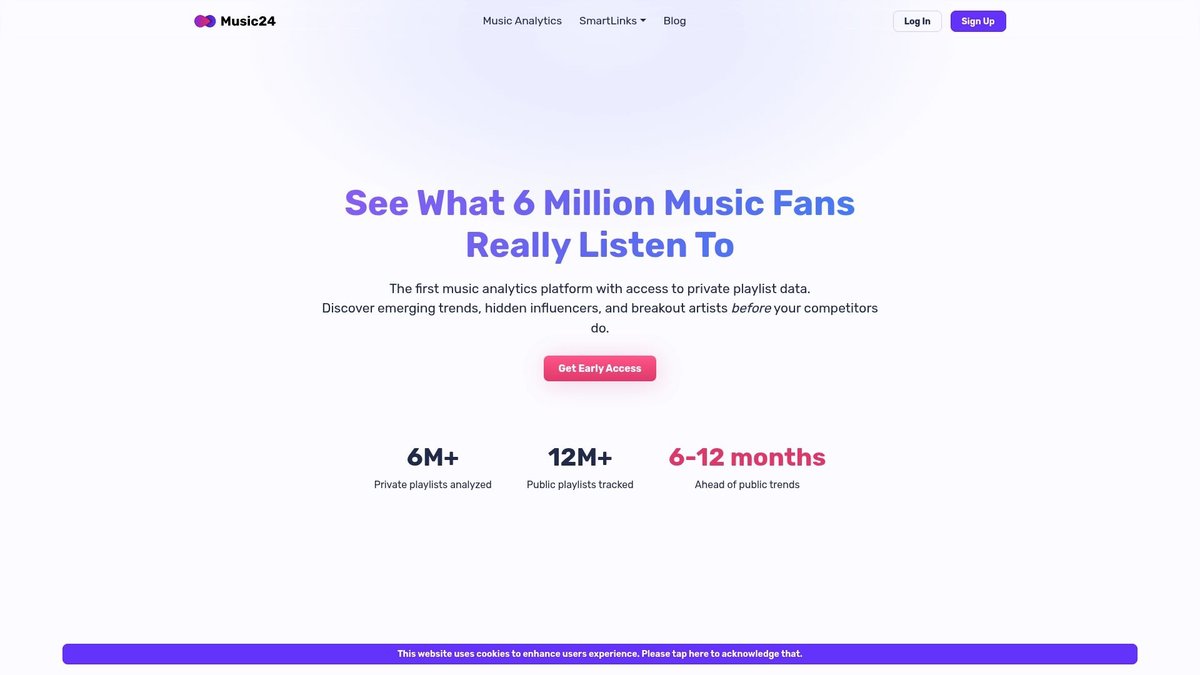
Explore how Music24 transforms your talent scouting and marketing strategies at Music24.com. Start uncovering hidden breakout artists now and lead the industry instead of following it. Learn more about our solutions at Music24.com and dive deeper into advanced analytics at Music24.com. Your next breakthrough artist is waiting.
Frequently Asked Questions
How can I analyze private playlist adds to identify breakout artists?
To analyze private playlist adds, track the volume growth, retention rates, and genre diversity of the artists in these playlists. Focus on monitoring trends over a period of 8-12 weeks to validate artist momentum before they reach public charts.
What signals indicate a successful genre blending in an artist?
Look for artists who appear in multiple genre-specific playlists simultaneously and are celebrated by independent curators. Noticing their cohesive sound across different styles can signal a unique appeal and potential for mainstream success.
How do I recognize micro-trends by region or demographic?
Monitor private playlists for regional concentration and observe the timing of artist trends in various geographical areas. Set up tracking for artists gaining momentum in 2-3 consecutive regions within 90 days for more precise detection of emerging trends.
What characteristics should I look for in influential playlist curators?
Identify curators by their addition timing, genre specificity, and the frequency with which their added artists gain wider traction. Building relationships with mid-tier curators often leads to valuable insights and opportunities for artist promotion.
Why is monitoring listener repetition important in identifying breakout artists?
Studying listener repetition can show which artists have a sustainable connection with their audience versus those with temporary popularity. Track repeat listening patterns over a 60-day period to gauge true engagement and potential for long-term success.
How do private playlist metrics enhance my understanding of artist engagement?
Private playlist metrics provide insights into genuine listener behavior, highlighting real engagement rather than superficial social media metrics. Focus on tracking playlist saves and listener diversity as primary indicators of an artist's sustainable popularity.

