
Spotting tomorrow’s breakout artists often starts with understanding why certain playlists ignite listener excitement worldwide. For A&R executives and marketing strategists, playlist segmentation offers a powerful window into the intricate ways audiences interact with music. By examining audio features, emotional themes, and user behavior, this data-driven approach turns raw listening habits into strategic insights. Discover how playlist segmentation can reveal hidden genre trends and give your team an edge in global talent discovery.
Table of Contents
- What Is Playlist Segmentation In Analytics?
- Types Of Playlist Segmentation Methods
- Key Data Points And How Segmentation Works
- Real-World Uses Of Playlist Segmentation
- Risks, Limitations, And Best Practices
Key Takeaways
| Point | Details |
|---|---|
| Playlist Segmentation Enhances Understanding | This technique categorizes music based on listener behavior and cultural trends, revealing deeper insights into audience preferences. |
| Diverse Segmentation Methods Provide Unique Insights | Combining algorithmic filtering, editorial curation, and user-generated categorization allows for a comprehensive analysis of musical consumption. |
| Actionable Data Points Inform Strategies | Key data such as audio features and user demographics help professionals craft targeted musical experiences and marketing campaigns. |
| Addressing Risks Promotes Ethical Practices | Continual evaluation of algorithms for bias and ensuring diverse data sources can enhance fair music discovery processes. |
What Is Playlist Segmentation in Analytics?
Playlist segmentation represents a sophisticated data analysis technique that transforms how music professionals understand listener behavior and emerging trends. At its core, playlist segmentation systematically categorizes music collections based on intricate characteristics that reveal deeper insights into musical preferences and cultural dynamics.
This analytical approach goes beyond simple playlist tracking by examining multiple dimensions of musical curation. Key aspects of playlist segmentation include:
- Analyzing playlist titles and themes
- Mapping song selection patterns
- Identifying emotional contexts of playlists
- Tracking listener demographic correlations
- Understanding algorithmic recommendation influences
The primary goal of playlist segmentation is to decode the complex relationships between musical selections, listener contexts, and emerging cultural trends. By breaking down playlists into granular components, music industry professionals can gain unprecedented visibility into how audiences discover, consume, and interact with music.
Listener Context Mapping becomes particularly powerful through segmentation. Professionals can now understand not just what songs are popular, but why certain playlists resonate with specific audiences. This approach transforms raw playlist data into strategic intelligence that can predict musical trends before they become mainstream.
Playlist segmentation reveals the intricate story behind music consumption, turning data points into meaningful narratives about listener behavior.
By leveraging advanced analytics techniques, music industry professionals can move beyond traditional chart metrics and tap into more nuanced, predictive insights about musical preferences and emerging artist potential.
Pro tip: Combine playlist segmentation with geographic and demographic data to uncover hyper-targeted insights about music discovery patterns.
Types of Playlist Segmentation Methods
Playlist segmentation encompasses several sophisticated methods that music professionals use to analyze and understand listener behavior. Clustering techniques transform raw playlist data into meaningful insights about musical preferences and consumption patterns.
Three primary approaches dominate playlist segmentation methods:
- Algorithmic Filtering: Uses machine learning to recommend songs based on listener history
- Editorial Curation: Professionally curated playlists targeting specific audiences
- User-Generated Categorization: Reflects personal taste and social sharing trends
Each segmentation method offers unique perspectives on musical consumption. Algorithmic filtering leverages complex machine learning models that analyze listener behavior, while editorial playlists provide expert-curated musical journeys designed to introduce audiences to new sounds and emerging artists.
Machine learning techniques like Principal Component Analysis (PCA) enable sophisticated playlist clustering beyond traditional categorization methods.
Advanced segmentation techniques go beyond simple genre classification. They analyze audio features like tempo, energy, and emotional valence to create nuanced musical profiles that predict listener preferences with unprecedented accuracy.

By combining multiple segmentation approaches, music industry professionals can develop comprehensive strategies for understanding listener behavior, discovering emerging trends, and crafting targeted musical experiences.
Here's a comparison of playlist segmentation methods and their advantages:
| Segmentation Method | Typical Use Case | Key Benefit | Business Impact |
|---|---|---|---|
| Algorithmic Filtering | Personalized recommendations | Matches songs to listener habits | Boosts user retention |
| Editorial Curation | Curated playlists for audiences | Introduces new artists and genres | Enhances brand differentiation |
| User-Generated Categorization | Social sharing and personal taste | Captures authentic preferences | Reveals emerging trends |
Pro tip: Integrate multiple segmentation methods to create a holistic understanding of playlist dynamics and listener preferences.
Key Data Points and How Segmentation Works
Playlist segmentation transforms complex musical data into actionable insights through sophisticated statistical analysis. The process decodes musical patterns by examining multiple layers of playlist characteristics, revealing hidden connections between listener preferences and emerging trends.
Key data points in playlist segmentation include:
- Audio Features: Danceability, acousticness, tempo
- Interaction Metrics: Playlist saves, skip rates, replay frequency
- Contextual Information: Playlist titles, mood descriptions
- User Demographics: Age, geographic location, listening habits
- Genre Crossover Indicators: Multi-genre playlist compositions
Statistical Clustering Methods play a critical role in transforming raw data into meaningful insights. Techniques like Principal Component Analysis (PCA) and spectral clustering enable music professionals to identify subtle patterns that traditional analysis might overlook.
Advanced segmentation goes beyond surface-level metrics, uncovering the emotional and cultural contexts that drive musical discovery.
The segmentation process involves complex machine learning algorithms that analyze multiple data dimensions simultaneously. These algorithms can detect nuanced relationships between songs, listeners, and cultural trends that human analysts might miss.
By integrating diverse data points, music industry professionals can create comprehensive musical profiles that predict listener preferences with unprecedented accuracy and depth.
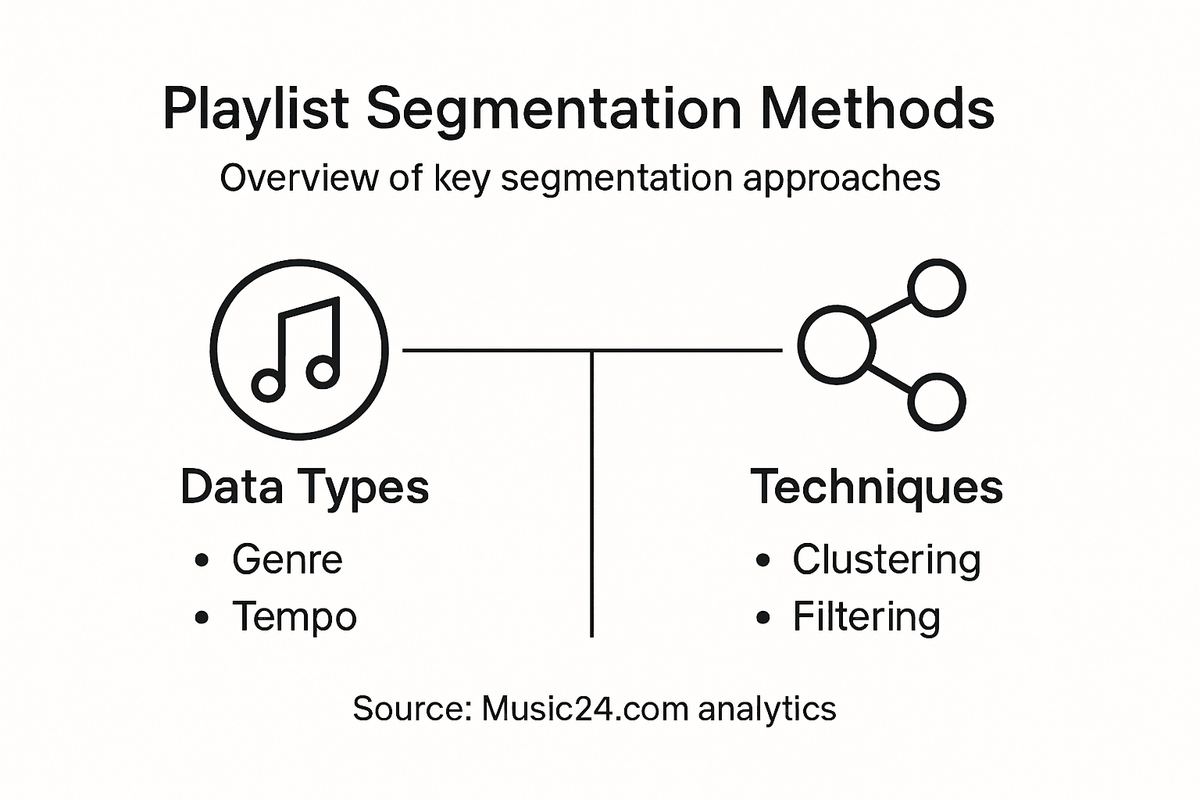
Pro tip: Combine multiple data points and clustering techniques to develop a more holistic understanding of playlist dynamics and listener behavior.
Real-World Uses of Playlist Segmentation
Music recommender systems leverage playlist segmentation to create more personalized and targeted musical experiences across global platforms. This sophisticated approach transforms raw data into strategic insights that drive music discovery and listener engagement.
Practical applications of playlist segmentation span multiple domains:
- A&R Talent Discovery: Identifying emerging artists before mainstream recognition
- Marketing Strategy: Developing targeted promotional campaigns
- Streaming Platform Optimization: Improving recommendation algorithms
- Artist Branding: Understanding cross-genre listener preferences
- Cultural Trend Analysis: Mapping musical evolution across demographics
Algorithmic Personalization represents a critical real-world implementation of playlist segmentation. By analyzing intricate listener behaviors, platforms can create hyper-personalized musical journeys that feel uniquely tailored to individual preferences.
Playlist segmentation transforms complex listener data into actionable insights that reshape how music is discovered, consumed, and marketed globally.
Beyond traditional recommendations, playlist segmentation enables music professionals to predict cultural shifts, understand emerging genre blending, and identify potential breakthrough artists before they hit mainstream charts.
The technology's power lies in its ability to decode subtle patterns that human analysts might overlook, providing unprecedented insights into musical consumption and listener behavior.
Pro tip: Combine multiple segmentation techniques to develop a comprehensive understanding of listener preferences and emerging musical trends.
Risks, Limitations, and Best Practices
Algorithmic bias poses significant challenges in playlist segmentation, potentially undermining the very insights music professionals seek to gain. Understanding these risks is crucial for developing more robust and equitable music discovery strategies.
Key risks and limitations in playlist segmentation include:
- Algorithmic Bias: Reinforcing existing popular trends
- Reduced User Autonomy: Over-reliance on automated recommendations
- Data Representation Gaps: Overlooking niche genres and emerging artists
- Privacy Concerns: Potential misuse of listener data
- Transparency Challenges: Opaque recommendation processes
Systemic Limitations can significantly impact the effectiveness of playlist segmentation. The risk of creating echo chambers is particularly pronounced, where listeners are repeatedly exposed to similar musical styles that align with their existing preferences.
Ethical playlist segmentation requires continuous evaluation, diverse data sources, and a commitment to algorithmic fairness.
Best practices demand a multi-faceted approach to mitigating these risks. Music professionals must develop sophisticated strategies that balance technological insights with human creativity and cultural nuance.
Successful implementation requires ongoing monitoring, diverse data integration, and a commitment to understanding the complex human elements that drive musical discovery beyond pure algorithmic analysis.
This summary outlines common risks and recommended mitigation strategies for playlist segmentation:
| Risk | Example Scenario | Mitigation Strategy |
|---|---|---|
| Algorithmic Bias | Repeating popular genres | Regular audits and diverse data |
| Privacy Concerns | Misuse of listener data | Strict compliance, anonymization |
| Reduced User Autonomy | Automated recommendations | Manual curation and transparency |
| Data Representation Gaps | Overlooked niche genres | Expand data sources and manual review |
Pro tip: Regularly audit your segmentation algorithms for bias and incorporate manual curation to ensure a more balanced and inclusive musical discovery experience.
Stay Ahead with Advanced Playlist Segmentation Insights
Understanding the complexity of playlist segmentation is essential to uncover hidden listener behaviors and predict emerging musical trends before they reach public charts. The article highlights challenges like algorithmic bias and fragmented data that hinder precise early artist discovery and trend prediction. If you want to move beyond surface-level metrics and decode authentic music discovery patterns seen only in private playlist data, you need solutions that offer granular, data-driven insights into listener preferences and genre blending.
Music24.com specializes in exactly this. By analyzing millions of anonymized private playlists, the platform empowers A&R teams, artist managers, and marketers to identify breakout artists earlier and craft targeted strategies that reflect actual listener habits—well before these trends go mainstream. With predictive analytics and a focus on geographic micro-trends, Music24 transforms complicated segmentation into actionable intelligence.
Unlock competitive advantage with Music24.com
Discover how to harness the power of private playlist analytics to predict musical hits and influence industry decisions. Visit Music24.com today to learn more about using playlist segmentation methods for sharper trend prediction and smarter marketing strategies. Take control of your music discovery process and identify the next big artist before the charts do.
Frequently Asked Questions
What is playlist segmentation?
Playlist segmentation is a data analysis technique that categorizes music collections based on characteristics that reveal insights into listener behavior, preferences, and emerging cultural trends.
How does playlist segmentation help music professionals?
It provides deeper insights into how audiences discover and interact with music, allowing music industry professionals to predict trends, understand listener contexts, and optimize music recommendations.
What are common methods used in playlist segmentation?
The primary methods include algorithmic filtering, editorial curation, and user-generated categorization, each offering unique perspectives on listener behavior and musical consumption.
What are the risks associated with playlist segmentation?
Key risks include algorithmic bias, reduced user autonomy, data representation gaps, privacy concerns, and transparency challenges, all of which can impact the effectiveness of music discovery strategies.
Recommended
- 7 Essential Music Industry Insights List for Spotting Trends - Blog - Music24.com
- How to Analyze Geographic Music Trends for Early Discovery - Blog - Music24.com
- Playlist Data Interpretation Steps for Early Trend Detection - Blog - Music24.com
- Trend Forecasting in Music: Gaining a Data Edge - Blog - Music24.com

