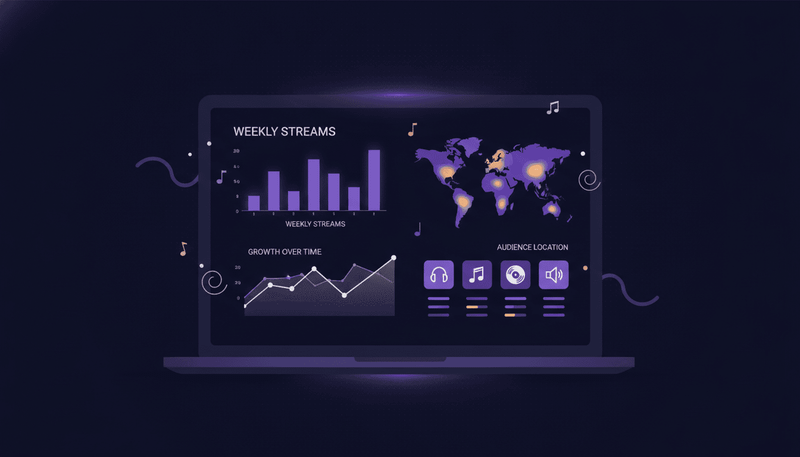
Music Industry Analytics: Unlocking Early Artist Discovery
Music industry analytics empowers A&R with predictive insights, private playlist trends, curator impact, and data-driven marketing strategies worldwide.

Spotting the next breakout artist is getting harder as musical trends shift faster across streaming platforms. Music industry analytics now give A&R executives access to deep data insights that go far beyond surface-level charts or playlist placements. By focusing on private playlist behaviors and integrating multiple data sources, professionals not only identify hidden talent but also fine-tune marketing strategies to fit evolving audience preferences, making discovery more intentional and creative.
Table of Contents
- Defining Music Industry Analytics and Its Scope
- Types of Music Analytics Data and Distinctions
- Analyzing Private Playlists Versus Public Metrics
- Uncovering Trends: Use Cases for A&R Teams
- Strategic Risks and Common Pitfalls to Avoid
Key Takeaways
| Point | Details |
|---|---|
| Music Analytics Transform Decision-Making | Advanced data analytics provide music professionals with data-driven insights for strategic planning, moving away from intuition-based approaches. |
| Diverse Data Types Enhance Insights | Incorporating various data types, including symbolic, audio feature, contextual, and performance metrics, offers a multidimensional understanding of musical trends. |
| Private Playlists Reveal Authentic Preferences | Analyzing private playlists provides genuine insights into listener tastes compared to public metrics, which can be influenced by trends and social performance. |
| Ethical Considerations are Essential | The reliance on data analytics requires attention to ethical concerns, particularly regarding privacy, algorithmic bias, and maintaining artistic diversity. |
Defining Music Industry Analytics and Its Scope
Music industry analytics represent a revolutionary approach to understanding complex musical ecosystems through advanced data processing techniques. By leveraging cutting-edge digital technologies, these analytics transform how record labels, artist managers, and music professionals uncover emerging talent and predict industry trends. Music information retrieval systems enable stakeholders to quantitatively study innovation across musical landscapes.
The core components of music industry analytics include:
- User Behavior Tracking: Analyzing listener interactions and consumption patterns
- Trend Identification: Detecting emerging musical styles and genre shifts
- Artist Discovery: Predicting potential breakout performers before mainstream recognition
- Market Segmentation: Understanding audience demographics and preferences
Traditionally, music industry decisions relied heavily on intuition and subjective judgment. Modern analytics fundamentally transform this approach by providing data-driven insights that enable more precise strategic planning. These sophisticated computational methods blend technological analysis with human creativity, creating a nuanced understanding of musical innovation.
The scope of music industry analytics extends far beyond simple streaming numbers. Professionals now use complex algorithms to examine:
- Musical composition characteristics
- Cross-genre collaboration patterns
- Geographic listener distribution
- Audience engagement metrics
- Playlist inclusion trends
Pro tip: Focus on integrating multiple data sources to develop a comprehensive view of musical trends and potential artist trajectories.
Types of Music Analytics Data and Distinctions
Music analytics encompass a complex ecosystem of data types that provide unprecedented insights into musical landscapes. Multimodal music datasets represent a sophisticated approach to understanding musical phenomena through diverse data representations, enabling professionals to extract nuanced insights beyond traditional metrics.
The primary categories of music analytics data include:
- Symbolic Data: Structured musical notation like MIDI and MusicXML files
- Audio Feature Data: Technical measurements of sound characteristics
- Contextual Data: Listener demographics, geographic information, and behavioral patterns
- Performance Metrics: Streaming numbers, playlist inclusions, and engagement rates
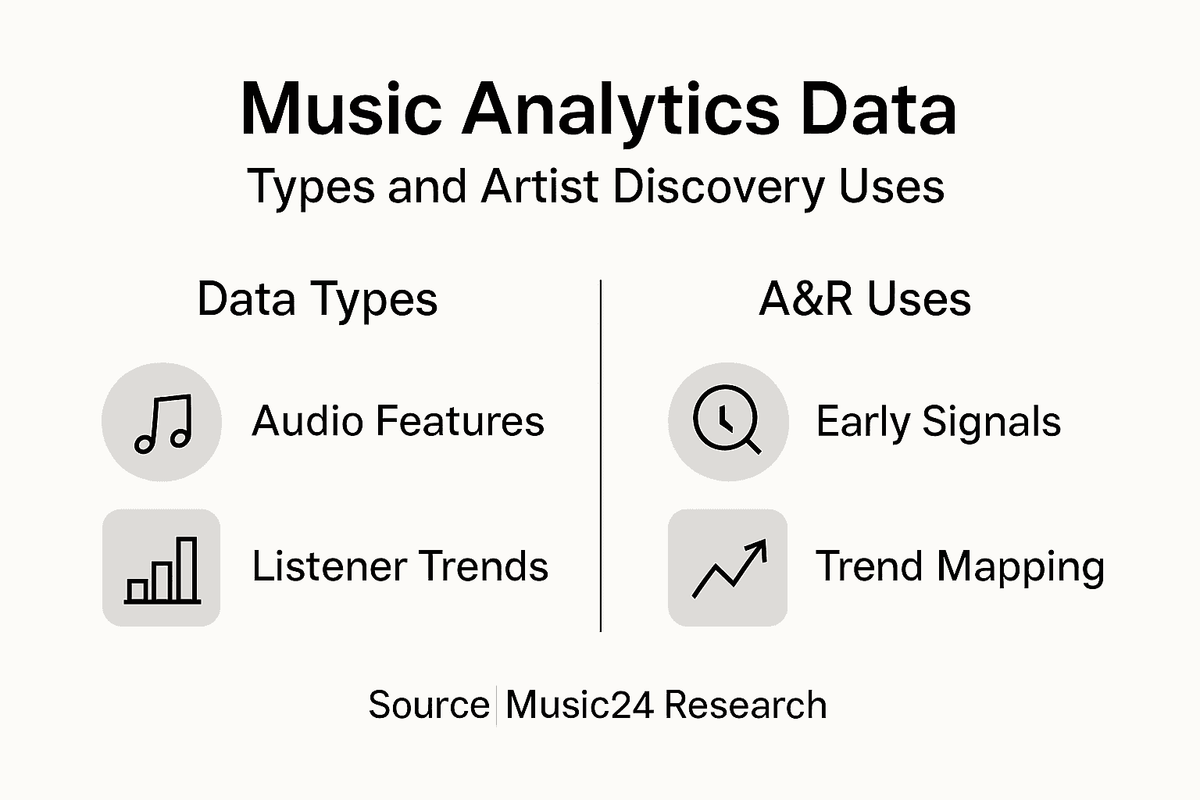
These data types differ significantly in their collection methods and analytical potential. Symbolic data provides intricate details about musical composition, while audio feature data captures the sonic qualities of recordings. Contextual data offers insights into listener preferences and cultural trends, creating a multidimensional understanding of musical ecosystems.
Professionals in the music industry now leverage these diverse data types to:
Here's a concise overview of how different music analytics data types contribute to industry decision-making:
| Data Type | Example Use | Unique Value |
|---|---|---|
| Symbolic Data | Composing AI-generated music | Enables analysis of song structure and musical literacy |
| Audio Feature Data | Matching songs to mood playlists | Reveals tonal quality and energy level |
| Contextual Data | Targeting listeners by location | Informs personalized marketing and outreach |
| Performance Metrics | Evaluating campaign success rates | Measures real-world fan engagement and impact |
- Predict emerging artist potential
- Understand genre evolution
- Develop targeted marketing strategies
- Identify cross-genre collaboration opportunities
- Analyze global music consumption patterns
Pro tip: Integrate multiple data types to develop a comprehensive and nuanced understanding of musical trends and artist potential.
Analyzing Private Playlists Versus Public Metrics
The music industry is experiencing a paradigm shift in how artist potential is evaluated, with a growing emphasis on understanding the nuanced differences between private and public playlist data. Public Spotify playlists reveal critical insights into user preferences while simultaneously raising important privacy considerations for music analytics professionals.
Key distinctions between private and public playlist metrics include:
- Public Playlist Characteristics:
- Curated for social sharing
- Intentionally crafted for external visibility
- Potentially influenced by external trends
- Private Playlist Characteristics:
- Reflect genuine, unfiltered listener preferences
- Contain more authentic musical discovery patterns
- Represent personal, unmoderated musical selections
Public metrics typically provide surface-level insights that can be misleading. Artists might appear popular based on playlist inclusions, but private playlists offer a deeper, more authentic understanding of actual listener behaviors. These personal collections reveal genuine musical preferences without the social performance aspect that often influences public playlist curation.

Professionals can leverage these insights by:
Compare private and public playlist data to understand their strategic implications:
| Metric Type | Data Authenticity | Impact on Artist Discovery |
|---|---|---|
| Public Playlists | Often influenced by trends | May exaggerate artist visibility |
| Private Playlists | Reflect true listener taste | Reveals genuine fan support and early adoption |
- Analyzing private playlist composition
- Identifying emerging genre crossovers
- Detecting authentic listener trends
- Understanding micro-regional musical preferences
- Predicting potential breakout artists
Pro tip: Prioritize deep analysis of private playlist data to uncover genuine musical trends that public metrics might obscure.
Uncovering Trends: Use Cases for A&R Teams
A&R teams are rapidly transforming their talent discovery strategies by leveraging advanced analytics technologies that go beyond traditional scouting methods. Advanced sound profiling platforms now enable professionals to identify emerging artists through sophisticated data analysis rather than relying solely on conventional popularity metrics.
Key use cases for A&R teams utilizing music analytics include:
- Talent Identification:
- Discovering artists in niche geographic regions
- Tracking emerging musical subgenres
- Identifying unique sonic characteristics
- Strategic Development:
- Predicting artist potential before mainstream recognition
- Understanding audience engagement patterns
- Mapping cross-genre collaboration opportunities
Traditional A&R approaches often missed nuanced musical talents by focusing exclusively on existing popularity indicators. Modern analytics platforms provide granular insights that help professionals uncover promising artists through comprehensive sonic and contextual analysis. These tools allow A&R teams to explore musical landscapes with unprecedented depth and precision.
Professionals can leverage these analytics strategies by:
- Creating detailed artist sound profiles
- Monitoring micro-regional musical trends
- Analyzing listener behavior across platforms
- Identifying potential breakthrough artists
- Understanding evolving genre dynamics
Pro tip: Develop a multidimensional approach to artist discovery by combining quantitative analytics with qualitative creative intuition.
Strategic Risks and Common Pitfalls to Avoid
The music industry's increasing reliance on data analytics presents complex challenges that demand nuanced strategic approaches. Music industry analytics introduce significant ethical considerations that extend far beyond simple data interpretation, requiring professionals to balance technological insights with artistic integrity.
Critical strategic risks in music analytics include:
- Data Interpretation Challenges:
- Algorithmic bias towards commercial success
- Misrepresentation of artistic potential
- Overlooking unconventional talent
- Ethical Concerns:
- Potential privacy violations
- Unintentional artist marginalization
- Reinforcing existing industry power structures
Data-driven decision-making can inadvertently create systemic limitations in artist discovery. By over-emphasizing quantitative metrics, analytics platforms risk reducing musical creativity to numerical patterns, potentially suppressing innovative and diverse artistic expressions that don't conform to algorithmic expectations.
Professionals should mitigate these risks by:
- Maintaining human creative judgment alongside data analysis
- Implementing diverse data collection methodologies
- Regularly auditing algorithmic recommendation systems
- Protecting artist and listener privacy
- Ensuring transparent data usage practices
Pro tip: Develop robust ethical guidelines that prioritize artistic diversity and individual creativity when implementing music analytics strategies.
Discover Emerging Artists Before Anyone Else with Data-Driven Insights
The article highlights the critical challenge of distinguishing authentic listener preferences hidden within private playlists versus widely visible but sometimes misleading public metrics. Music24.com solves this by leveraging proprietary access to anonymized private playlist data to uncover genuine music discovery patterns and early artist potential that traditional analytics miss. By prioritizing these deeply personal playlists, you gain a competitive advantage in identifying breakout talent, tracking cross-genre trends, and understanding micro-regional listener behaviors before they hit mainstream attention.
Use playlist data made for A&R teams, artist managers, and music marketers who want to move beyond surface-level streaming numbers. Harness advanced tools designed to reveal nuanced sonic profiles and influential curators shaping tomorrow’s hits today.
Elevate your talent discovery process with Music24. Music24 also does the work around a release: add a song and it makes the posts and the videos, plans the rollout and publishes to TikTok, Instagram, YouTube, Facebook and Threads.
Ready to turn private playlist insights into your next success story?
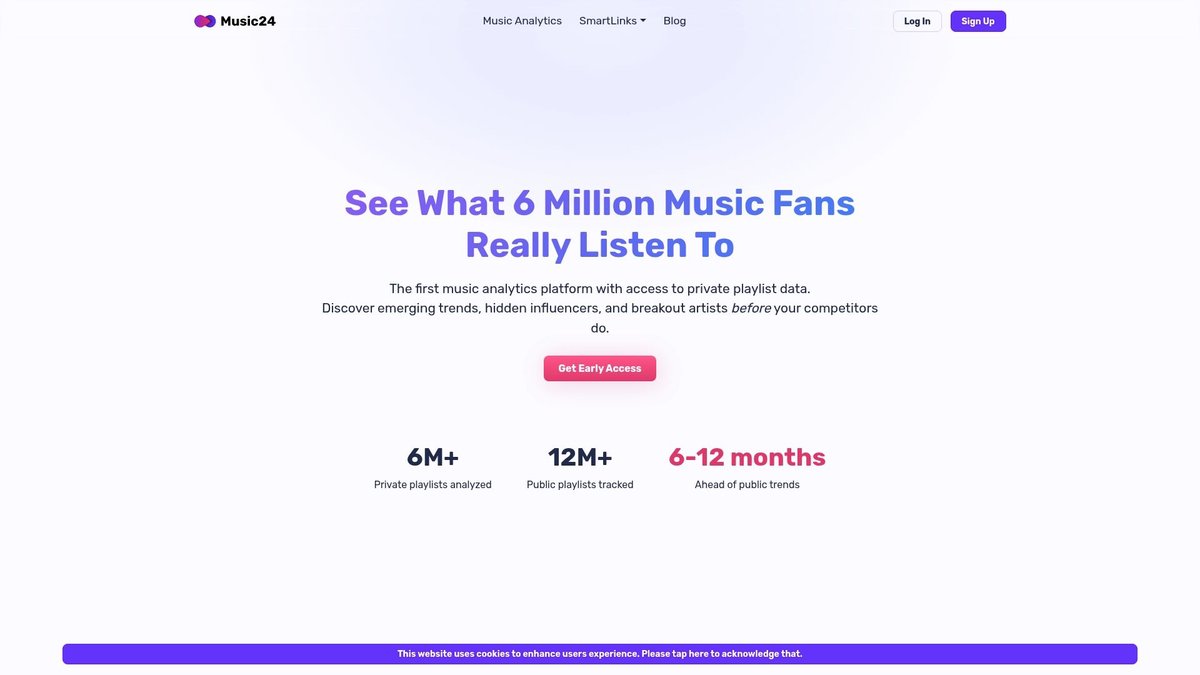
Explore how early artist discovery can transform your strategy at Music24.com. Take the next step to identify rising stars and craft impactful marketing strategies now.
Frequently Asked Questions
What are music industry analytics?
Music industry analytics involve using advanced data processing techniques to understand complex musical ecosystems, enabling insights into talent discovery, trend prediction, and audience behavior.
How do music analytics aid in artist discovery?
Music analytics help identify emerging talent by analyzing listener behavior patterns, tracking subgenre trends, and predicting artist potential based on various data-driven metrics.
What types of data are used in music analytics?
Key data types include symbolic data (musical notation), audio feature data (sound characteristics), contextual data (listener demographics), and performance metrics (streaming and engagement rates).
What are the risks associated with relying on music analytics?
Potential risks include algorithmic bias, misrepresentation of artistic potential, and ethical concerns regarding privacy and the marginalization of unconventional talent.
Recommended
- Step by Step Emerging Artist Discovery for A&Rs - Blog - Music24.com
- How to Discover New Music: Step-by-Step Guide for Fans
Get your music heard. Grow the fans who stay.
Add a song. music24 makes the posts and the videos, plans your release and publishes it on every channel. Free for 7 days on the Pro plan, no card.