Best Music Marketing Tools in 2026: 15+ Tools Every Artist and Manager Needs
The best music marketing tools in 2026 span analytics, social media, email, playlist pitching, distribution, and website builders. Compare 15+ tools by features, pricing, and value to build the right stack for your goals.
Best Music Marketing Tools in 2026: 15+ Tools Every Artist and Manager Needs
Every day, 120,000+ new tracks hit streaming platforms. The right music marketing tools separate artists who break through from those who get buried. This guide ranks 15+ tools across analytics, social media, email, playlist pitching, and website builders, with pricing, features, and a side-by-side comparison table to help you build the stack that fits your goals and budget.
What Are Music Marketing Tools and Why You Need Them
Music marketing tools are software platforms that help artists, labels, and managers promote releases, grow audiences, and measure what works. They cover analytics, social media scheduling, email campaigns, playlist pitching, distribution, and fan-facing websites. Without them, you are guessing where your listeners are, what content drives saves, and which marketing dollars actually return results.
A strong tool stack does three things: it shows you where fans are coming from, it automates repetitive promotion tasks, and it surfaces signals early enough to act on them. The difference between an artist who breaks out and one who stalls often comes down to seeing the right data at the right time and having the workflow to act on it fast.
Best Music Marketing Tools in 2026
Here is a quick comparison of the top tools, followed by detailed breakdowns in each category.
| Tool | Category | Best For | Key Feature | Free Tier | Starting Price |
|---|---|---|---|---|---|
| Music24 | Promotion and analytics | Release kits, scheduled posting, playlist data | Makes and posts a release campaign from one song | 7-day trial, no card | Free, then from $19/mo |
| Spotify for Artists | Analytics | Spotify performance tracking | Real-time stats, editorial pitch tool | Yes | Free |
| Apple Music for Artists | Analytics | Apple ecosystem + Shazam data | Shazam identification signals | Yes | Free |
| YouTube Studio | Analytics | Video performance | Watch time, retention, traffic sources | Yes | Free |
| Buffer | Social Media | Multi-platform scheduling | Cross-platform analytics, Start Page | Yes | $6/mo/channel |
| Later | Social Media | Visual content planning | Drag-and-drop calendar, Linkin.bio | Yes | $25/mo |
| Canva | Social Media / Design | Visual content creation | Templates, brand kits, video editing | Yes | $13/mo (Pro) |
| Mailchimp | Email campaigns | Segmentation, automations, landing pages | Yes (500 contacts) | $13/mo | |
| Kit (formerly ConvertKit) | Creator-focused automations | Visual automation builder, tagging | Yes (10K subs) | $25/mo | |
| Beehiiv | Email / Newsletter | Newsletter-first strategy | Referral programs, monetization | Yes (2,500 subs) | $39/mo |
| SubmitHub | Playlist Pitching | Independent curator pitching | Guaranteed feedback, curator stats | Yes | $1/credit |
| Playlist Push | Playlist Pitching | Targeted playlist campaigns | Campaign analytics, curator matching | No | ~$250/campaign |
| DistroKid | Distribution | High-volume releases | Unlimited uploads, flat annual fee | No | $22.99/yr |
| TuneCore | Distribution | Royalty tracking | Revenue splits, publishing admin | No | $9.99/release |
| CD Baby | Distribution | Physical + digital | Sync licensing, physical fulfillment | No | $9.95/release |
| Bandzoogle | Website / EPK | Artist websites | Built-in store, commission-free sales | No | $8.29/mo |
| Linktree | Website / EPK | Link-in-bio pages | Multi-link landing page, analytics | Yes | $5/mo (Pro) |
Analytics and Data Tools
Analytics tools form the foundation of any serious marketing stack. They tell you what works, what does not, and where to spend your next dollar.
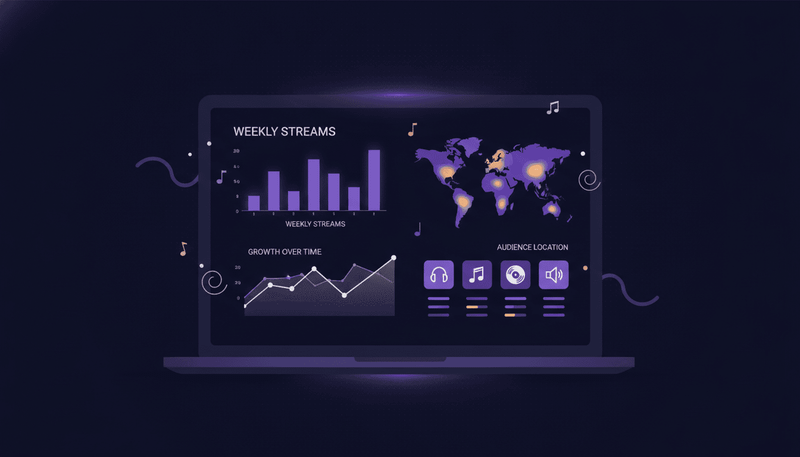
Music24 Most analytics platforms show you public playlist placements and streaming totals. Music24 makes the posts and videos for a release, schedules them to five platforms and shows which post moved your streams. A track added to hundreds of playlists in a week signals organic demand before it surfaces on editorial radar. Music24 also shows which curators actually drive saves, not just follower counts. There is a Free plan, and paid plans start at $19/month with a 7-day free trial that needs no card.
Spotify for Artists Essential for any act on Spotify. Real-time streaming data, city-level audience demographics, and playlist placement tracking come free. The editorial playlist pitch tool is built in. The limitation: Spotify-only coverage, and zero visibility into private listening behavior. Best for: Spotify-specific performance tracking and editorial pitching. Price: Free.
Apple Music for Artists Covers the Apple ecosystem, including Shazam identification data. Shazam signals are particularly valuable for identifying tracks gaining recognition in real-world environments: shops, bars, gyms, and live events. That data points directly to sync and radio potential. Best for: Apple ecosystem insights and Shazam-driven discovery signals. Price: Free.
YouTube Studio Delivers watch-time analytics, audience retention curves, traffic source breakdowns, and revenue tracking. For artists investing in music videos, visualizers, or short-form content, it is non-negotiable. Best for: Video content performance and audience retention analysis. Price: Free.
For a deeper look at how analytics workflows connect these platforms into a decision pipeline, see our step-by-step guide.
Social Media Management Tools
Social media is where fans discover artists and where relationships convert streams into ticket sales, merch revenue, and long-term loyalty. These tools keep your posting consistent and your content data-driven. For hashtag strategies that drive organic reach, check our guide on music hashtags for artists.
Buffer Schedule posts across Instagram, TikTok, X, Facebook, LinkedIn, Threads, and Bluesky from one dashboard. The analytics layer shows which content formats drive the most engagement. The Start Page feature creates a free link-in-bio landing page. Best for: Multi-platform scheduling with built-in analytics. Price: Free tier available. Paid from $6/month per channel.
Later Built around visual content planning. The drag-and-drop calendar handles Instagram and TikTok workflows well. The Linkin.bio feature turns your Instagram profile into a mini-site. AI-assisted caption writing (added in late 2025) speeds up content creation for solo artists. Best for: Visual-first content planning, Instagram and TikTok workflows. Price: Free tier available. Paid from $25/month.
Canva Covers visual content creation: social graphics, cover art concepts, merch mockups, event flyers, and short-form video templates. The free tier is generous. Pro ($13/month) adds brand kits, background removal, and a larger template library. Best for: Design without a designer. Price: Free tier available. Pro from $13/month.
Email Marketing Tools for Musicians
Social algorithms change constantly. Email lists do not. Owning your fan relationships through email marketing is the most reliable way to guarantee your message reaches your audience on release day, tour announcement day, and every day in between.
Mailchimp The default starting point for most independent artists. The free tier supports up to 500 contacts with basic automations and landing pages. Segmentation features let you target pre-sale codes to superfans, tour dates by city, and merch drops to past buyers. Best for: Getting started with email marketing on a budget. Price: Free (up to 500 contacts). Paid from $13/month.
Kit (formerly ConvertKit) Designed for creators. Visual automation builders make it easy to set up welcome sequences, release-day campaigns, and re-engagement flows. Subscriber tagging is more flexible than most platforms for artists managing multiple projects or collaborative acts. The free tier covers up to 10,000 subscribers. Best for: Creator-focused automations and subscriber management. Price: Free (up to 10,000 subscribers). Paid from $25/month.
Beehiiv The newer entrant gaining traction with music industry newsletters. Built-in referral programs, monetization options, and a clean writing interface make it worth evaluating if you plan to build a newsletter as a core channel for building a loyal fanbase. Best for: Newsletter-first artists and industry commentators. Price: Free (up to 2,500 subscribers). Paid from $39/month.
Playlist Pitching and Distribution Tools
Playlist placement remains one of the most effective ways to reach new listeners. Understanding the role of curators and how curator influence shapes discovery helps you pitch to the right people, not just the biggest playlists.
Spotify Editorial Pitching (via Spotify for Artists) The only direct path to Spotify editorial playlists. Submit unreleased tracks at least seven days before release. Free, and every distributed artist should use it for every release. Best for: Official Spotify editorial playlist consideration. Price: Free.
SubmitHub Connects artists with playlist curators, bloggers, and influencers. Standard credits (free) get slower response times. Premium credits ($1 each) guarantee a listen and written feedback within 48 hours. The platform shows curator acceptance rates and genre preferences. Best for: Independent playlist and blog pitching with guaranteed responses. Price: Free tier available. Premium credits from $1 each.
Playlist Push Matches your music with independent playlist curators based on genre, mood, and listener demographics. Campaigns start around $250 and target curators who have opted in. The platform provides campaign analytics showing adds, streams, and listener retention. Best for: Targeted independent playlist campaigns with detailed analytics. Price: Campaigns from approximately $250.
Distribution Platforms All three major indie distributors now include playlist pitching or promotional features:
- DistroKid ($22.99/year): Unlimited uploads, Spotify editorial pitch integration, automatic social clips.
- TuneCore ($9.99/single, $29.99/album): Detailed royalty reporting, publishing admin, social video distribution.
- CD Baby ($9.95/single, $29.95/album): Digital and physical distribution, sync licensing marketplace access.
Choose your distributor based on release cadence. Monthly singles? DistroKid's flat fee wins. One album a year? Per-release pricing may cost less.
Website and EPK Builders
Your website is the only piece of digital real estate you fully control. Social profiles can get suspended, algorithms can bury your posts, and streaming platforms can change their rules. A dedicated site anchors your brand and gives you a place to sell direct, collect emails, and host your electronic press kit (EPK).
Bandzoogle Purpose-built for musicians. Drag-and-drop website builder with built-in store (commission-free), mailing list tools, EPK templates, and direct-to-fan sales for music, merch, and tickets. No coding required. Hundreds of music-focused templates. Best for: Artists who want a full website with integrated sales. Price: From $8.29/month (billed annually).
Linktree The go-to link-in-bio solution. Creates a simple landing page with links to your streaming profiles, merch store, upcoming shows, and social accounts. The free tier covers basics. Pro ($5/month) adds analytics, custom themes, and email collection. Best for: Quick link-in-bio setup for social profiles. Price: Free tier available. Pro from $5/month.
Carrd One-page website builder that works well for minimal EPKs and landing pages. Extremely affordable at $19/year for Pro. Limited to single-page sites, but for artists who just need a clean landing page with links, bio, and contact info, it gets the job done. Best for: Minimal one-page EPKs and landing pages. Price: Free tier available. Pro from $19/year.
For more on where to advertise your music online, see our dedicated guide.
How to Choose the Right Music Marketing Stack
Building a stack is not about buying every tool on this list. Match tools to your goals, release volume, and growth stage.
Start with your biggest bottleneck. If you do not know where your listeners come from, start with analytics. If you have the data but cannot reach fans consistently, invest in email and social scheduling. If your music is not reaching new ears, focus on playlist pitching and distribution.
Avoid overlap. Buffer and Later do similar things. Pick one. Mailchimp and Kit both handle email. Choose based on whether you need simplicity (Mailchimp) or advanced automations (Kit).
Match pricing to release cadence. A solo artist releasing two singles a year does not need the same stack as a label managing 20 artists with weekly releases.
Audit quarterly. Every 90 days, ask: Which tools am I logging into weekly? Which data points drove a concrete decision? Am I paying for features I never use? Cut what is not earning its keep.
Free vs. Paid Music Marketing Tools
Free tools cover the basics. Spotify for Artists, Apple Music for Artists, YouTube Studio, and Canva's free tier give you analytics, design, and content creation at zero cost. Add a distributor and you have a functional starting point.
Paid tools earn their cost when they save you time or surface insights you cannot get for free. Here is where the line falls:
Free stack ($0 to $25/month): Platform analytics (Spotify, Apple, YouTube), Canva free tier, Mailchimp free tier (500 contacts), DistroKid ($22.99/year). Covers essentials for any independent artist.
Growth stack ($50 to $100/month): Everything above, plus Music24 (from $19/month) for release kits, scheduled posting and analytics. Add Buffer or Later for social scheduling. Upgrade email to Kit for automations. Right for artists with growing audiences and regular releases.
Professional stack ($150 to $400/month): Full analytics suite, advanced email segmentation, social scheduling with team collaboration, periodic Playlist Push or SubmitHub campaigns, and a Bandzoogle site. For labels, management teams, and artists with dedicated marketing support, these tools pay for themselves through smarter A&R decisions and more efficient spend.
The real cost of a free-only stack is not the price tag. It is the signals you miss: private playlist behavior, curator influence data, and cross-platform trends that public dashboards do not show. When a single early signal leads to signing an artist at 10,000 monthly listeners instead of competing for them at 1,000,000, a $19/month tool pays for itself many times over.
Where Music24 fits
Music24 reads millions of public playlists and charts every day. Its public data shows which playlists add songs like the ones you work with, which tracks and artists are gaining playlists fastest in a genre, and the countries where that genre grows. Follow the artists, tracks and playlists you care about and get an email when they move.
Start free with Music24: 7 days of the Pro plan, no card, then a Free plan for as long as you like.
FAQ
What are music marketing tools?
Music marketing tools are software platforms that help artists, labels, and managers promote music, grow audiences, and measure performance. They span analytics, social media management, email marketing, playlist pitching, content design, website building, and digital distribution.
What is the best free music marketing tool in 2026?
Spotify for Artists is the strongest free starting point. It provides real-time streaming data, audience demographics by city, and built-in editorial playlist pitching. Pair it with Apple Music for Artists and YouTube Studio for a solid free analytics foundation across three major platforms.
How much should I spend on music marketing tools?
Independent artists can build an effective stack for $0 to $30 per month using free platform analytics and a distributor. Growing artists typically invest $50 to $100 per month, adding paid analytics and social scheduling. Labels and management teams usually spend $150 to $400 per month for deeper data, team features, and playlist campaigns.
Do I need a dedicated analytics tool if I already use Spotify for Artists?
Music24 reads millions of public playlists and charts every day and shows which playlists add songs like yours, which tracks and artists are gaining playlists fastest in a genre, and the countries where that genre grows.
What is the difference between music marketing tools and music promotion tools?
The terms overlap. Music marketing tools cover the full spectrum: analytics, CRM, design, distribution, and strategy. Music promotion tools focus specifically on getting music in front of new listeners through playlist pitching, ad campaigns, or influencer outreach. A complete strategy uses both.
How do I choose the right music distribution platform?
Match the distributor to your release cadence. Artists releasing singles monthly benefit from DistroKid's flat-fee unlimited model ($22.99/year). Artists releasing one or two projects annually may prefer per-release pricing from TuneCore or CD Baby. Also consider whether you need publishing administration, sync licensing, or physical distribution.
Can analytics tools help with playlist placement?
Yes. Music24 reads millions of public playlists and charts every day and shows which playlists add songs like yours. Use that list to choose the playlists to pitch.
How often should I review my music marketing stack?
Review quarterly. Every 90 days, audit which tools you actively use, which data points drove real decisions, and whether your release cadence or team size has changed. Cut tools that are not delivering value and reinvest in the ones that are.
Get your music heard. Skip the content grind.
Add a song. Music24 makes the posts and the videos, plans your release and publishes it on every channel. Free for 7 days on the Pro plan, no card.